



Walking to School? 10 Pedestrian Safety Tips for Texas Kids
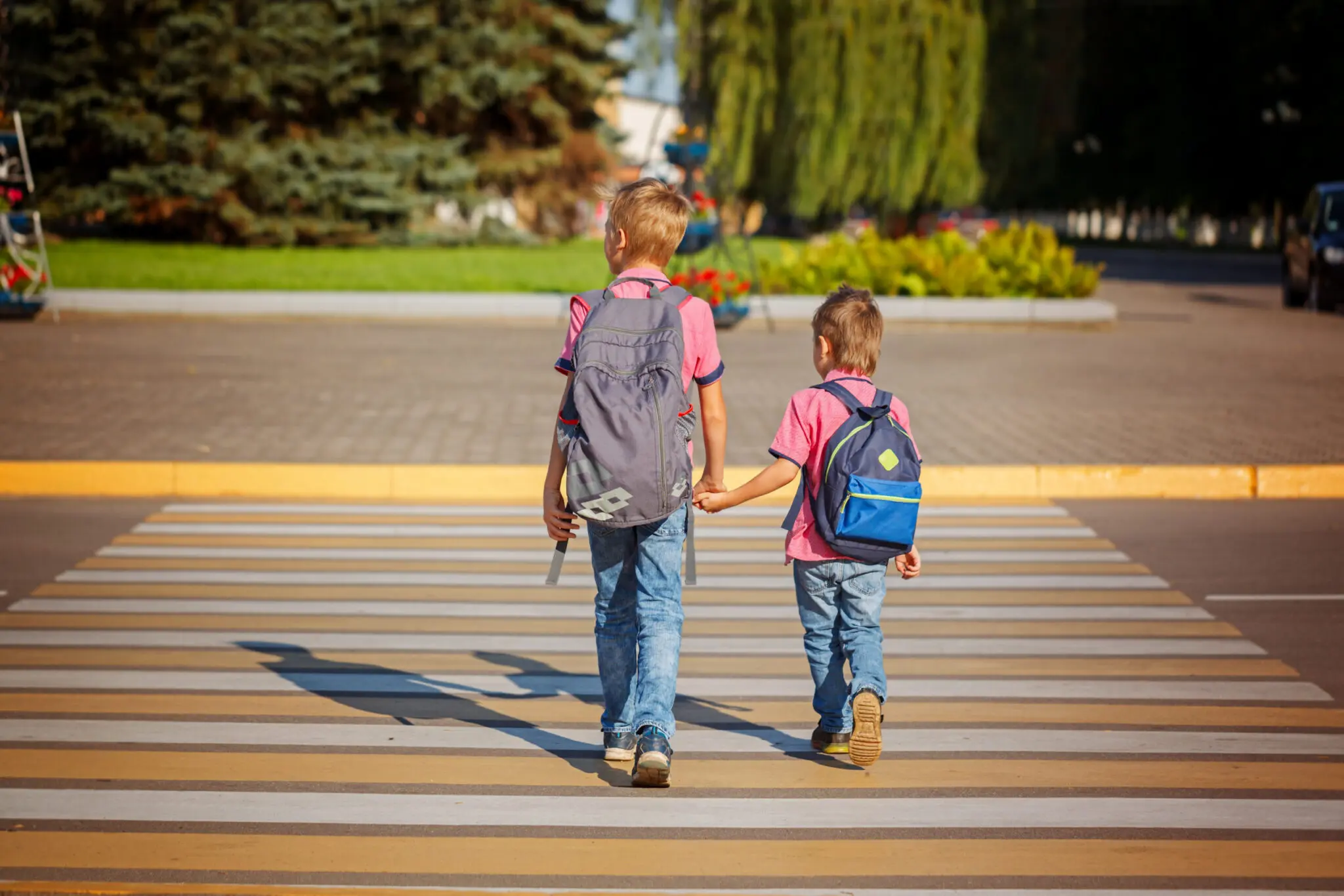
Walking to school unsupervised can be a major milestone for children. It gives kids an opportunity to develop independence, exercise good judgment, and put the safety skills they’ve learned into practice.
Still, walking near traffic is never without risks, especially during busy travel hours when school zones are crowded with cars, buses, and bicycles. This is why pedestrian accidents are so common around schools.
As another school year gets underway, take the time to review proper pedestrian safety with your child. The more informed your kid is, the more prepared they will be for potential hazards they may face as they walk to and from school.
1. Use Sidewalks Whenever Possible
Sidewalks and designed pedestrian paths are the safest places for pedestrians to walk.
Teach your child to always walk on the sidewalk when one is available, even if traffic appears light. If no sidewalk is available, your child should walk facing traffic while staying as far away from vehicles as practical.
Parents should also choose a route that is the safest, even if it is not the shortest. If consistent access to sidewalks means adding a block or two to your child’s route, then it is well worth the extra few minutes of travel time.
2. Cross Streets at Crosswalks
Children should cross streets at marked crosswalks or designated intersections whenever possible. Crossing in the middle of a block, from between parked cars, or at other locations where drivers may not expect pedestrians can expose your child to unnecessary risks.
Walk the route to school with your child and point out the safest places to cross. Practicing the route can help children become familiar with the intersections and traffic patterns they will encounter.
3. Look Left, Right, and Left Again
One of the most important pedestrian habits is also one of the simplest: look before crossing.
Teach children to:
- Stop at the edge of the road.
- Look left.
- Look right.
- Look left again.
- Make sure approaching vehicles have stopped or there is enough distance to safely cross.
- Continue to monitor traffic while crossing.
Children should not assume that a driver sees them simply because they can see the vehicle. Making eye contact with a driver can provide an additional indication that the driver is aware of the pedestrian.
4. Don’t Assume a Driver Will Stop
Unfortunately, a walk signal, crosswalk, or the child’s right of way does not guarantee that every driver will stop.
Drivers can be distracted, speeding, impaired, unfamiliar with the area, or simply fail to notice a pedestrian. Children should never step into traffic without first making sure it is safe.
Teach children to make sure all lanes are clear before crossing and, again, make eye contact with drivers to ensure they see them.
5. Put Away Phones and Other Distractions
Walking while looking at a phone can take a child’s attention away from traffic. The same is true for headphones, games, and other distractions.
Children should keep their eyes and ears focused on their surroundings when crossing streets or walking near traffic.
If your child listens to music while walking, consider establishing a rule that headphones stay off, or at least that the volume remains low enough for the child to hear approaching vehicles, bicycles, and other pedestrians.
The goal is simple: see and hear what is happening around you.
6. Be Careful Around School Buses
Children should never walk behind a school bus or attempt to cross the street immediately in front of one without following the bus driver’s instructions and established crossing procedures.
If riding a bus is part of your child’s commute, instruct them to follow the driver’s direction when getting off the bus and to use designated crossing when available.
They should also avoid chasing dropped belongings into the street. Instead, have them ask the bus driver or another adult for help.
7. Watch for Cars Backing Up
Parking lots and driveways can be particularly dangerous for young pedestrians.
A driver backing out of a driveway or parking space may have limited visibility, especially when children are small and difficult to see over or around a vehicle.
Teach your kid to avoid walking directly behind vehicles and to give cars plenty of room when they are backing up. Also, remind them that just because a car is stationary now does not mean it isn’t going to move soon.
8. Wear Bright or Reflective Clothing When Visibility Is Poor
Children walking to school early in the morning may encounter low-light conditions, especially during the fall and winter months.
Bright-colored clothing can make pedestrians easier for drivers to see. Reflective elements on backpacks, shoes, jackets, or other clothing can also improve visibility in low-light conditions.
This can be very helpful on roads without sidewalks or where children must walk close to vehicle traffic.
Consider visibility when choosing a walking route as well. A route with adequate lighting and sidewalks may be preferable to a darker road with limited pedestrian infrastructure.
9. Follow Traffic Signals and Listen Crossing Guards
Traffic signals, pedestrian signals, crossing guards, and school safety personnel are there to keep children safe around traffic
Children should follow pedestrian signals and wait for the appropriate signal before crossing. When a crossing guard is present, children should follow the guard’s instructions and should never cross before the guard says it is safe to do so.
As always, explaining to your kid why the rules exist can go a long way. Children who understand the purpose of a traffic signal or crossing guard may be more likely to follow those rules consistently.
10. Practice the Route Before School Starts
One of the best ways to prepare a child to walk to school is to practice the route together.
Walk the route with your child several times before the first day and identify:
- Safe places to cross
- Sidewalks and pedestrian paths
- Intersections with crossing guards
- School entrances
- Busy driveways and parking lots
- Areas with limited visibility
- Locations where your child should stop and check for traffic
Parents can gradually give children more responsibility as they become comfortable with the route.
If the first day has already passed, it is not too late! You can still walk the route in the evening or on a weekend and advise your child on safe habits and potential hazards.
Parents and Drivers Have a Role in Pedestrian Safety
Teaching children safe pedestrian habits is only part of the equation. Drivers also play an important role in keeping children safe around schools and neighborhoods.
As the school year begins, drivers should slow down in school zones, watch carefully for children near crosswalks and intersections, avoid distracted driving, and be prepared for children to enter the roadway unexpectedly.
Drivers should also pay close attention around school drop-off and pickup areas. Children may move unpredictably as they walk between vehicles, buses, sidewalks, and school entrances.
A few extra seconds of caution can make a significant difference.
What Should You Do If Your Child Is Injured by a Vehicle?
Even when children and drivers follow safety precautions, pedestrian accidents can still happen. A child struck by a vehicle may suffer serious injuries, and the consequences can extend well beyond the initial accident.
If your child is injured in a pedestrian accident, seek appropriate medical attention and report the accident to the proper authorities. Keep records of medical treatment, expenses, and other information related to the incident.
If you have any questions, contact Thomas J. Henry for a FREE case review. We can help you understand your child’s rights as well as secure compensation for any damages you or your child may have suffered.
Blog